Introduction
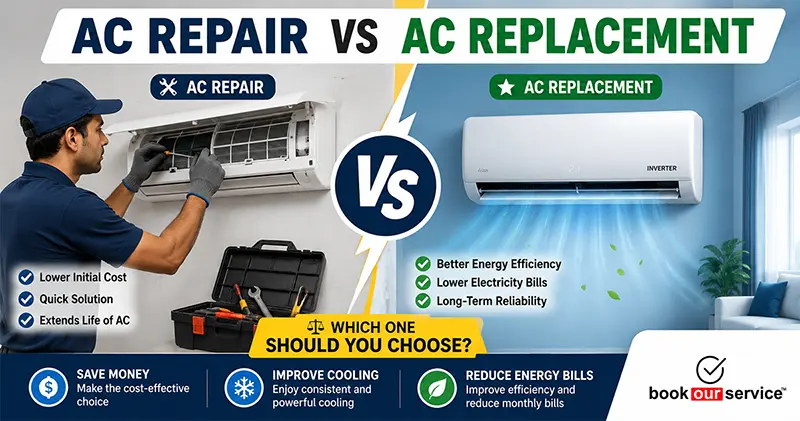
When your air conditioner starts showing signs of trouble, one of the biggest questions homeowners face is whether to repair the existing unit or replace it entirely. While repairs can often solve minor issues and extend the life of your AC, there comes a point when replacement becomes the smarter and more cost-effective option.
Making the right decision can save you money, improve energy efficiency, and ensure reliable cooling for years to come. In this guide, we'll compare AC repair and AC replacement, discuss costs, benefits, and key factors to consider before making a decision.
Understanding AC Repair
Learn what AC repair includes and when it is the right choice.
AC repair involves fixing specific components of your air conditioning system to restore normal operation. Professional repair services help improve cooling performance, extend equipment lifespan, and prevent costly breakdowns.
Common AC Repair Services Include:
Benefits of AC Repair
When AC Repair Makes Sense
You should consider repairing your AC if:
- The unit is less than 8 years old
- Repair costs are relatively low
- Cooling performance has been satisfactory
- Energy bills remain reasonable
- The system has not required frequent repairs
Understanding AC Replacement
When replacing your old air conditioner becomes the smarter investment.
AC replacement involves removing the existing system and installing a new air conditioner. This may include replacing both indoor and outdoor units to ensure compatibility, reliability, and maximum energy efficiency.
Benefits of AC Replacement
When AC Replacement Makes Sense
Replacement is often the better choice when:
Expert Recommendation
If your AC frequently breaks down, consumes excessive electricity, and requires costly repairs, replacing the unit may save you more money over the long term.
The 50% Rule
Many HVAC professionals recommend following the "50% Rule" when deciding whether to repair or replace an air conditioner.
Example Calculation
Repair Cost
₹20,000
New AC Cost
₹40,000
AC Repair vs AC Replacement Comparison
| Factor | AC Repair | AC Replacement |
|---|---|---|
| Initial Cost | Lower | Higher |
| Long-Term Savings | Limited | Significant |
| Energy Efficiency | May remain unchanged | Much higher |
| Warranty Coverage | Usually limited | Full manufacturer warranty |
| Lifespan Extension | Moderate | Completely new lifespan |
| Cooling Performance | Depends on system condition | Excellent |
| Maintenance Costs | May increase over time | Usually lower |
Energy Efficiency Considerations
Older air conditioners often consume significantly more electricity than modern inverter systems. Upgrading to a newer AC can improve cooling performance while reducing monthly utility expenses.
Benefits of Replacing an Old AC
Warning Signs That Replacement May Be Better
Watch for these indicators that suggest replacing your air conditioner may be more cost-effective than repairing it.
Frequent Breakdowns
If you're calling technicians multiple times each year, replacement may be more economical.
Rising Electricity Bills
Older systems lose efficiency and consume more electricity over time.
Uneven Cooling
Hot and cold spots throughout your home often indicate aging equipment.
Expensive Component Failures
Compressor, condenser, and evaporator coil failures can be expensive to repair.
Excessive Noise
Older AC units often become noisier as motors, bearings, and internal components wear out.
When Repair Is the Better Option
Repair is often the right choice if:
Cost Comparison Example
- Compressor Replacement: ₹15,000
- AC Age: 5 Years
- Energy Efficiency: Good
- Major Repair Cost: ₹25,000
- AC Age: 12 Years
- Rising Electricity Bills
- Multiple Previous Repairs
Expert Recommendation
There is no one-size-fits-all answer. The decision depends on:
- Age of the AC
- Repair cost
- Energy efficiency
- Frequency of breakdowns
- Future maintenance expenses
Conclusion
Choosing between AC repair and AC replacement requires careful evaluation of your system's condition, age, repair history, and operating costs.
While repairs can extend the life of a newer unit, replacing an aging system often provides better performance, lower energy bills, and greater peace of mind.
If you're unsure which option is right for you, schedule an inspection with a qualified AC technician. A professional evaluation can help you make an informed decision and ensure reliable cooling for years to come.